One of twelve failed ideas turned into the only one that mattered
In September 2018, Jon Yongfook gave himself a public challenge: launch 12 startups in 12 months. Most died within weeks. One didn't: a small tool called Previewmojo that auto-generated link-preview images, the kind you see when a URL unfurls on social media.
The twist was in what people kept asking Previewmojo to do. They didn't just want previews.
They wanted banners, certificates, social cards, product images, the same templating idea pointed at anything a business needed to generate at scale instead of design by hand.
In January–February 2020, Yongfook rebranded the tool to Bannerbear. He repositioned it from a nice-to-have preview generator into what he's called a painkiller: an API and no-code platform that auto-generates images, videos and PDFs from templates.
It stayed bootstrapped from that point on: no outside funding, a deliberately small team, built on a boring, unglamorous stack by design.
To see what that repositioning means in practice: picture a mid-size online store running a seasonal sale across 200 products.
The old way is a designer opening each product photo and manually building a banner (price, discount badge, brand colors) one at a time.
With Bannerbear, the store connects its product feed to a template once, and the API generates all 200 on-brand banners in minutes. No designer touches a single file after the template is set.
That's the shift from "a tool that makes one nice image" to "infrastructure that makes images at the rate your business runs."
The site looks like a content machine. The traffic says it isn't one.
Bannerbear runs roughly 1,043 indexed pages today: 350-plus blog posts, 280 template pages, 230 help docs, a 90-page programmatic use-case folder, a dozen "alternatives" comparisons.
By page count, that's a company with a broad, years-deep content strategy.
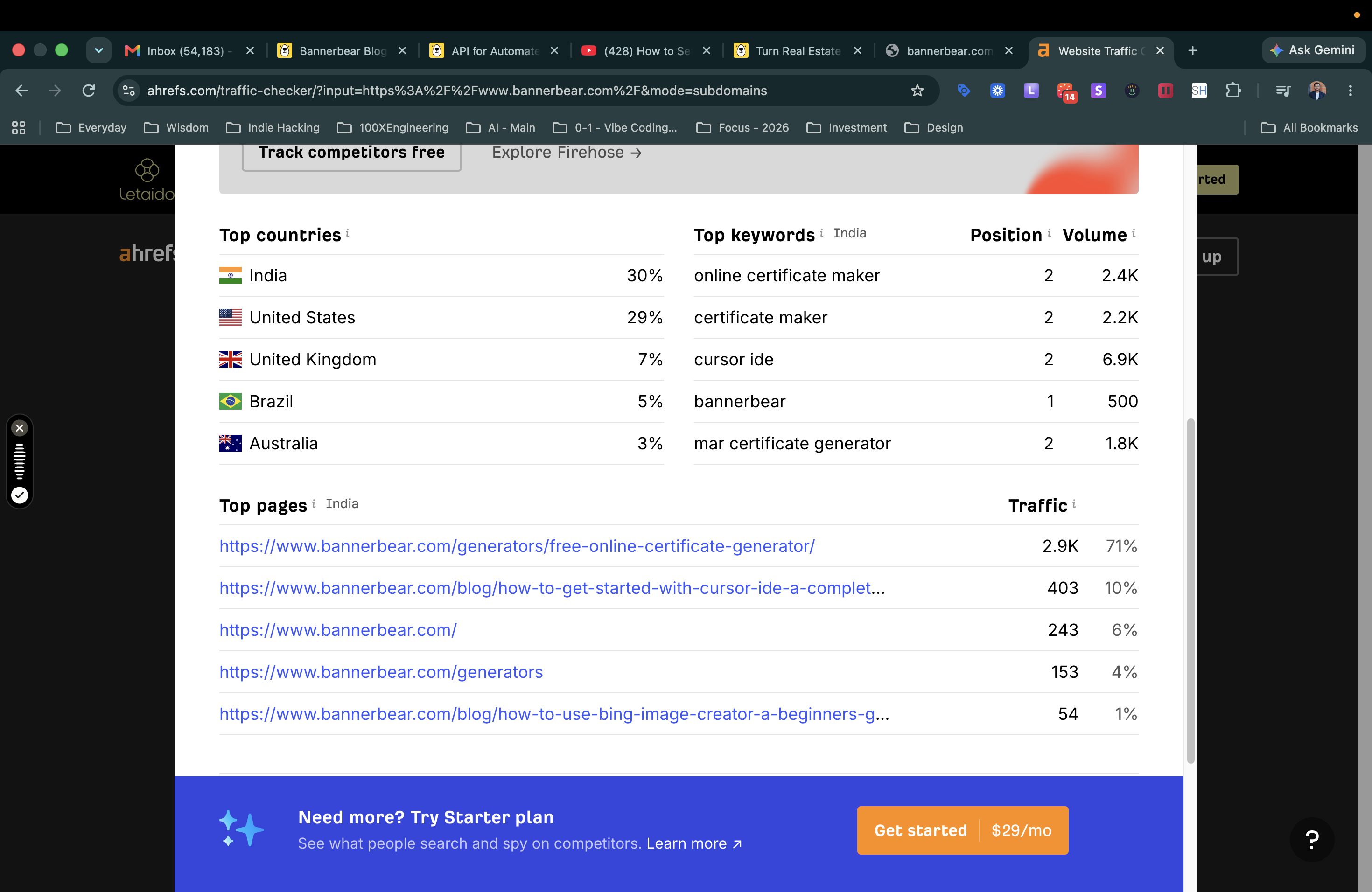
Open Ahrefs and the picture flips: one free tool, a certificate generator, is estimated to carry 71% of all organic traffic, 2.9K of roughly 4.1K monthly visits.
Everything else on the site, all thousand-plus other pages, splits what's left.
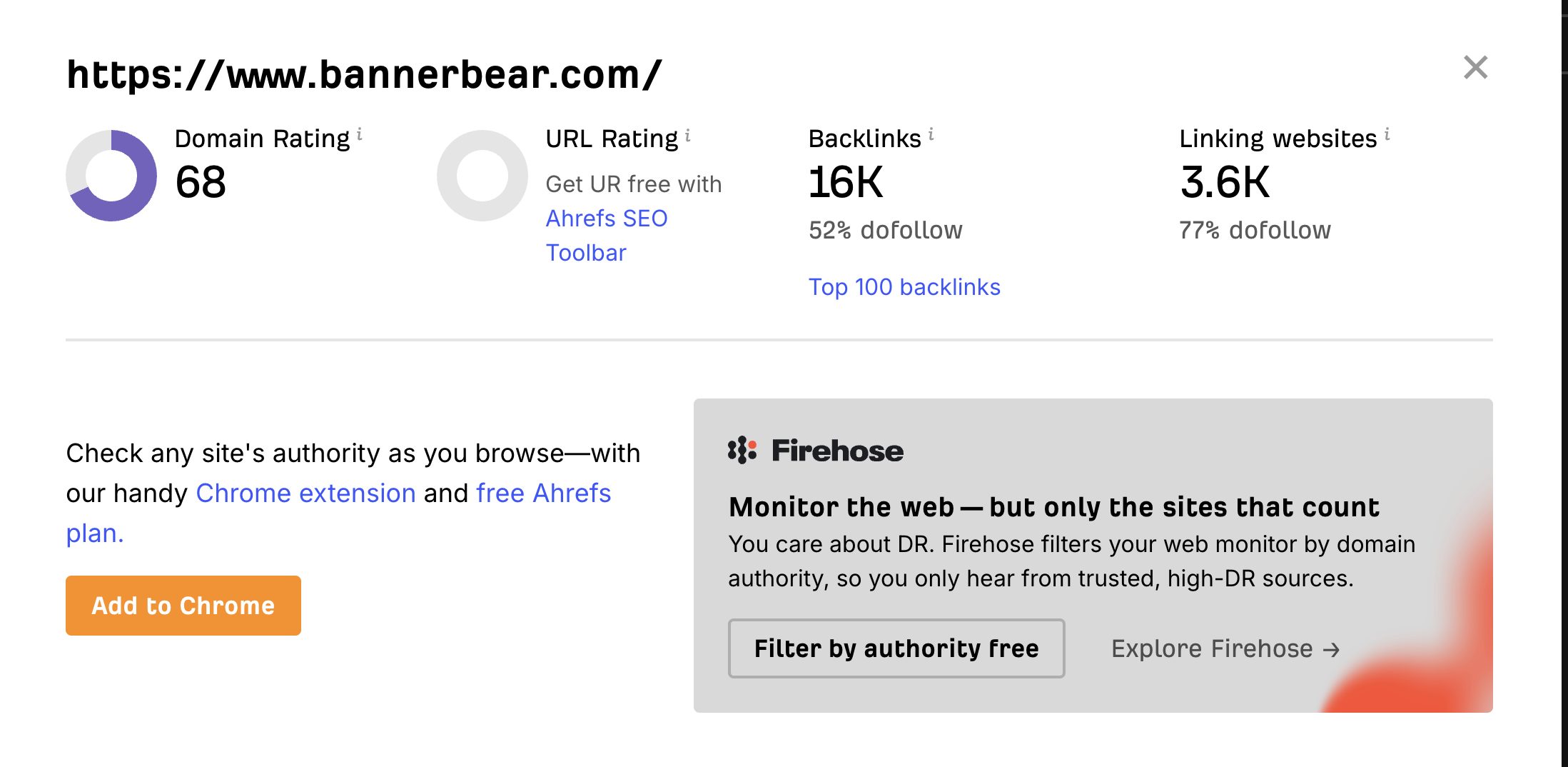
The domain itself checks out: Domain Rating 68, about 16,000 backlinks (52% dofollow) from roughly 3,600 linking sites (77% dofollow). Solid numbers for a company this size.
They just don't explain, on their own, why the traffic sits almost entirely on one page.
My read: the reason the free tools lean the way they do is the audience. This is built for people who need a lot of images fast and don't want a design subscription: e-commerce, real estate, publishing, podcasts. That's who's typing "online certificate maker" into Google, not a designer shopping for a new tool.
One free tool outranks everything else on the site combined
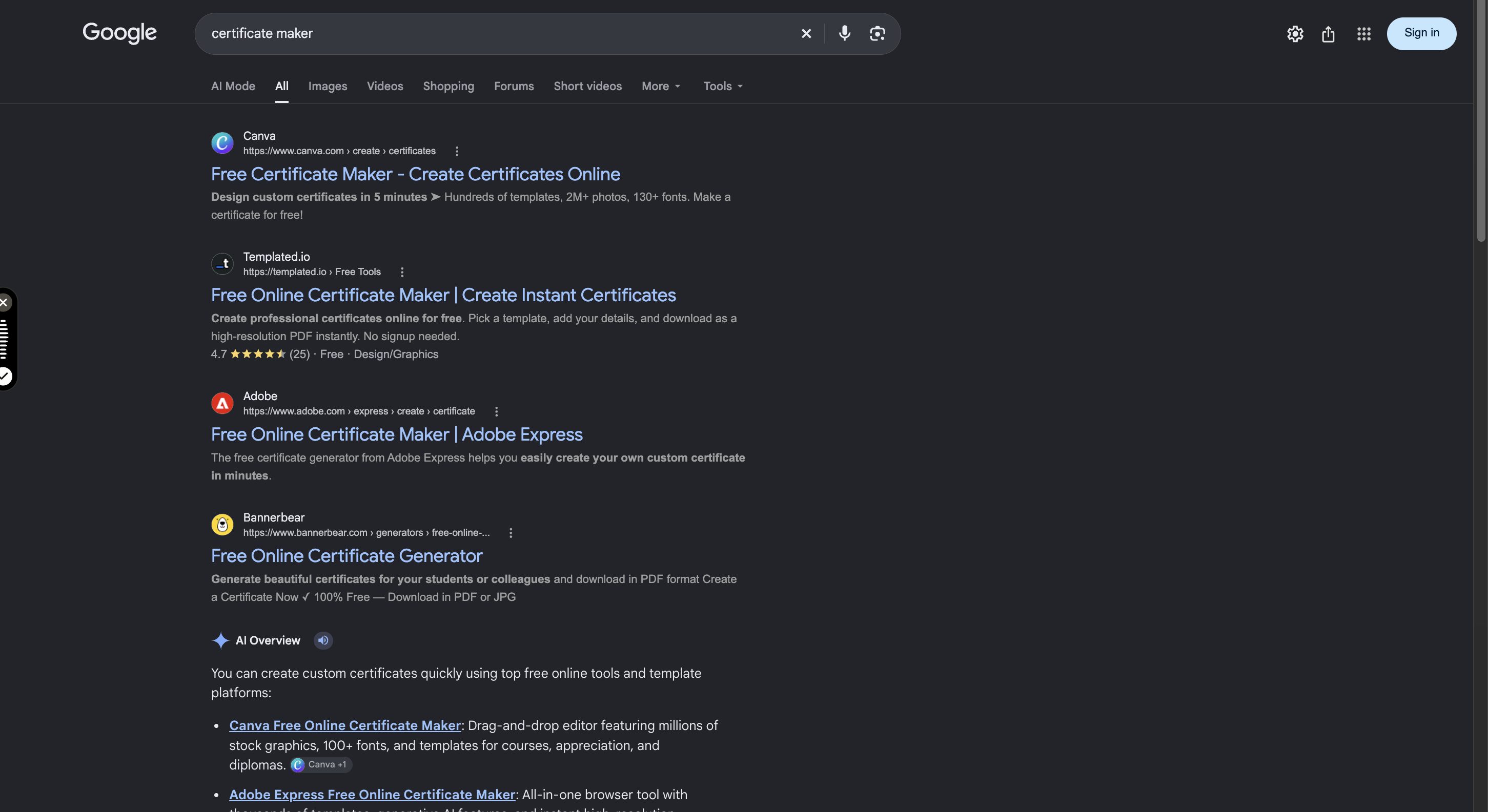
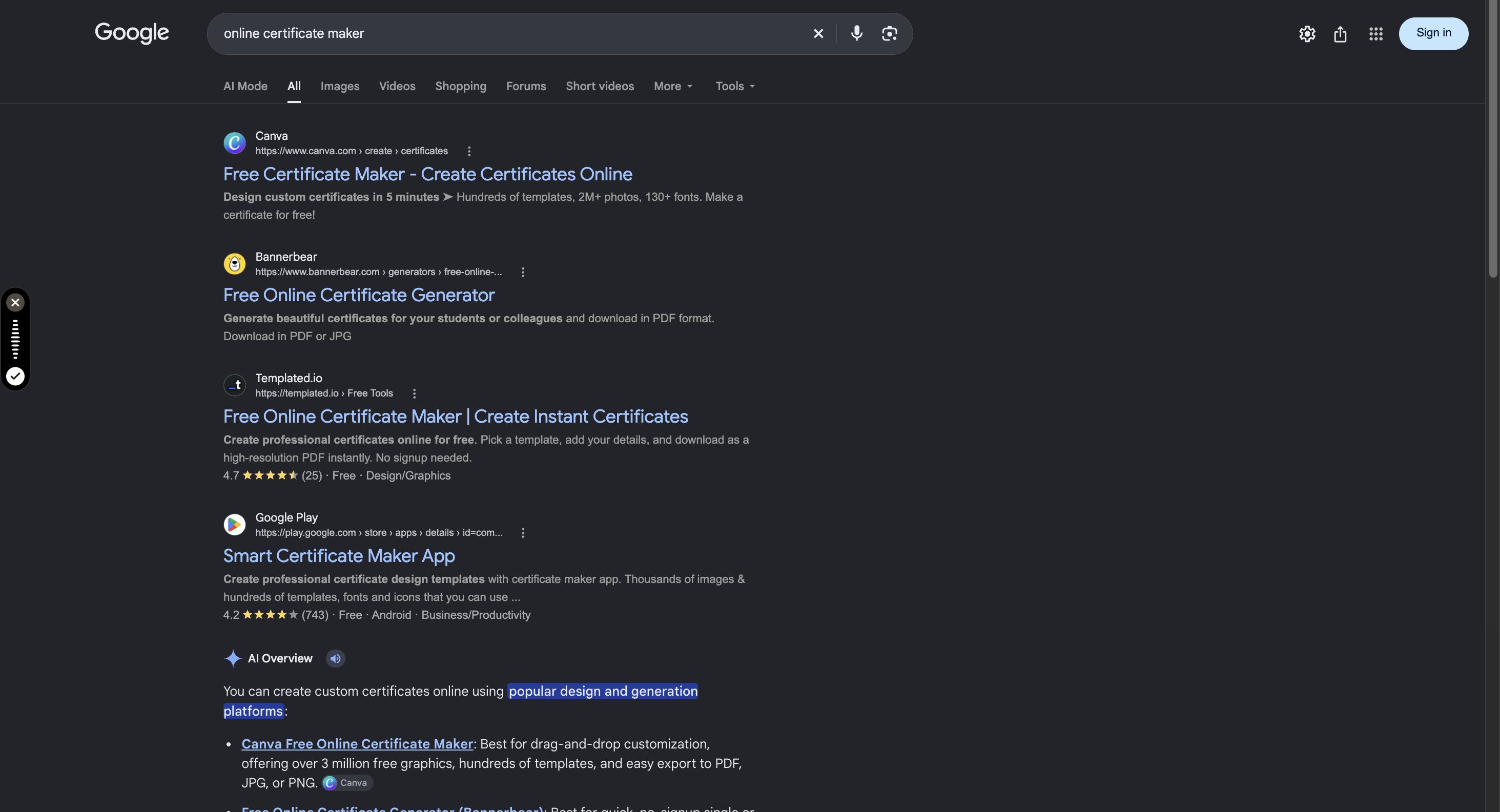
"Online certificate maker" ranks #2 (2,400 searches/mo). "Certificate maker" ranks #4 (2,200/mo).
Both go to the same free tool, sitting in the real results right below Canva and beside Adobe Express, not a blog post, but a tool page competing directly with the big names on the exact page type people expect.
The site's single biggest keyword by volume has nothing to do with certificates at all.
"Cursor ide" pulls 6,900 searches a month, more than both certificate terms combined, and ranks #3 off a blog post, "How to get started with Cursor IDE," that never mentions Bannerbear once. More on that below.
Not everything on the site is getting checked, though. A 404'd page, "How to use Bing Image Creator," is still estimated to pull ~153 visits a month: traffic landing on a dead URL.
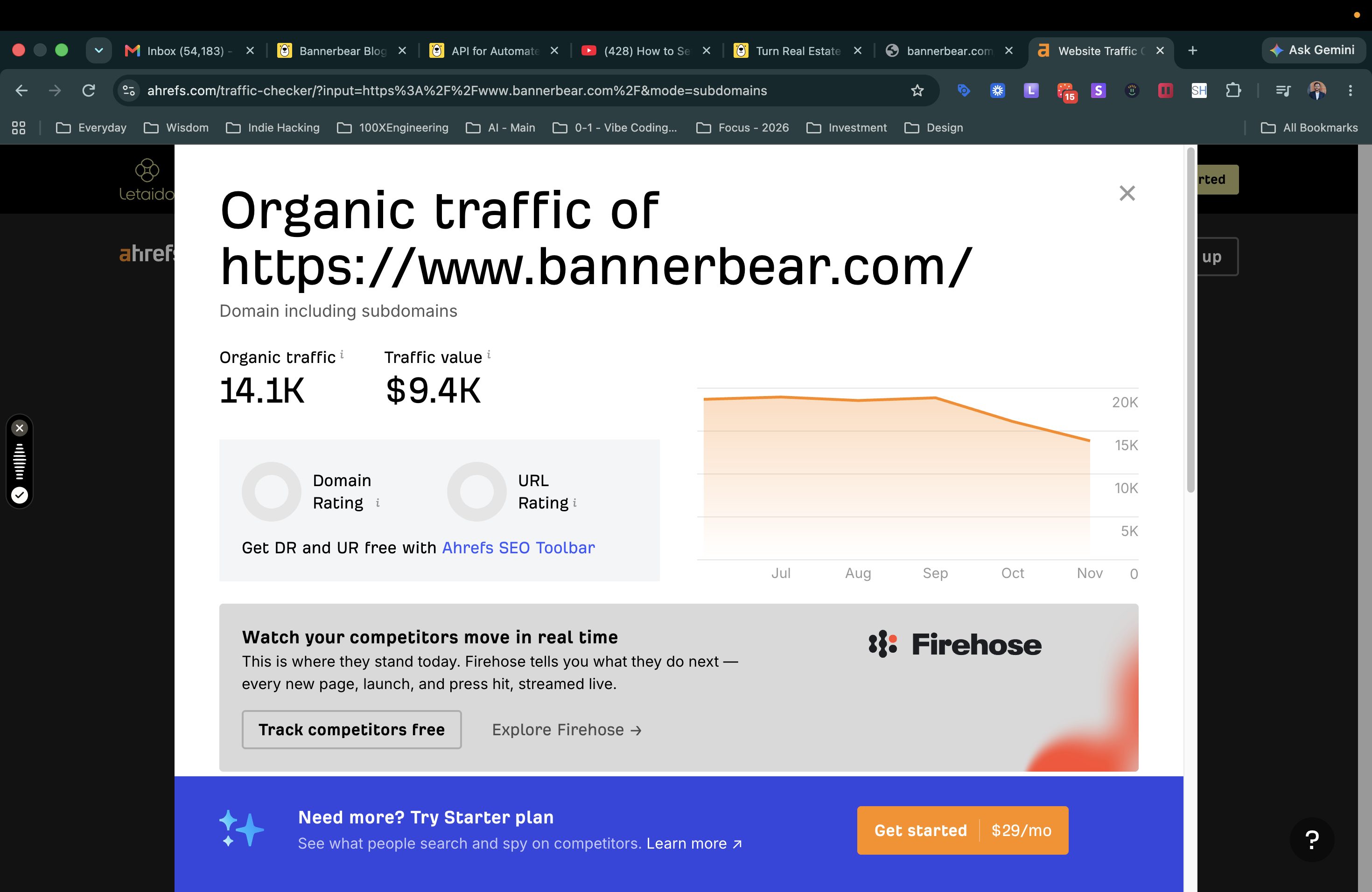
And the trend line for the whole domain is worth holding onto: Ahrefs' own estimate runs from roughly 20K down to 14.1K monthly visits between July and November 2026, a real decline in the data. More on what that could mean further down.
My read: I wouldn't call it the only free tool. There could be many other free tools pulling traffic, and we just can't see it from here. The real game being played, even now in 2026, is that free tools can still generate you traffic and sales, if it's something your niche genuinely needs and it makes sense rather than just spamming out tools.
Why a certificate generator, and why a Cursor IDE tutorial
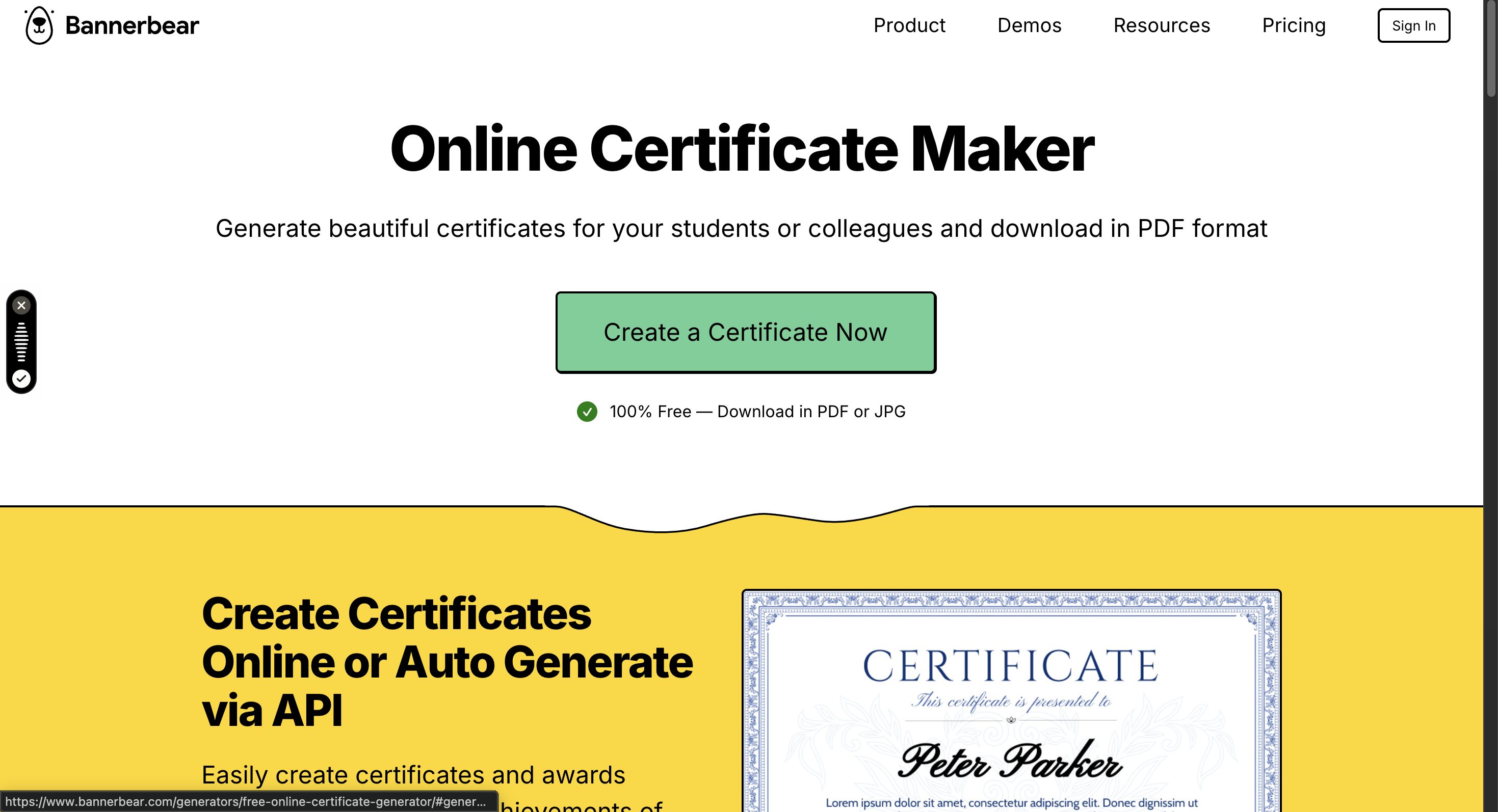
The certificate generator works because it removes the only two things people were ever shopping for: cost and signup friction.
"Online certificate maker" is a low-commitment, high-volume search: a teacher, an event organizer, an HR person needing one certificate, not a design subscription.
Bannerbear's free tool answers that exact intent with no account wall. It's positioned as a tool result, not a blog post, so it competes directly with Canva and Adobe on the page type searchers already expect.
The API underneath is the upsell: once someone needs 50 certificates instead of one, the free tool is also the fastest path to "I need the API for this."
That's the funnel: free tool first, paid automation once volume shows up, and it's visible in the product pages themselves, not something we're inferring from outside.
The Cursor IDE post is a different, unclaimed mechanic: write for the audience you want, not the product you sell.
It's a straightforward setup guide (installation, AI modes, tab completion, pricing) aimed at developers learning Cursor, with no Bannerbear pitch anywhere in it.
This is confirmed and observable on the live site: Bannerbear is running developer-facing, keyword-heavy content with no obvious tie to its own product. It's pulling more search volume (6.9K/mo) than the certificate tool's two keywords combined.
What it's for isn't stated anywhere we found: we don't know the intent behind it and we don't know what it converts to internally.
But as a pattern, it's real: Bannerbear's own ICP is developers integrating an API, and a page that just helps developers with an adjacent tool is a plausible way to sit in front of that audience before they ever search for an image-generation API by name.
My read: I think they're just helping. The target audience is developers, and they're creating references so developers end up in their funnel. You don't need to promote your product in every piece: if you provide value to your ICP, they'll come into the funnel on their own. That's what I believe is happening here.
Set against that: a ~90-page programmatic /use-cases/scenarios/ folder exists on the site and is never mentioned by the founder in anything we found.
By page count it's one of the largest sections of the site. By the traffic data above, it isn't carrying meaningful search volume on its own: it sits in the "everything else" that splits what's left after the certificate tool and the Cursor post.
Verdict
A lot of people say free tools don't work anymore. In Bannerbear's case, that's clearly not true. It's generating traffic, even if we don't know what's happening on the backend with sales. The founder's own posts on X suggest it's still working out for them.
The second thing worth noting: anyone can write a blog with Claude now. What stands out here is that Bannerbear is still adding genuinely technical, deep content that their ICP, developers, actually needs, and that's winning them the top of the funnel. That's good.
What's still unclear: their bottom-of-funnel content. Both patterns above are top-of-funnel plays. We couldn't find anything that tells us whether SEO is doing anything for them further down the funnel, closer to the actual sale. That's an open question, not a confirmed gap either way.
What could break it
Backward: why the decline might already be happening.
Ahrefs' own traffic-estimate trend for the domain runs from roughly 20K to 14.1K estimated monthly visits across the Jul–Nov 2026 window shown in the tool. That's a real decline in the estimate, not a one-off dip.
We can't confirm the cause from outside. It could be a seasonal pattern, a ranking change on the certificate tool specifically, or a broader shift. AI answer engines keeping searchers on the results page instead of clicking through is a plausible, unverified factor, not something we tested here.
Forward: why one page carrying 71% of traffic is a structural risk, confirmed either way.
Whatever caused the Jul–Nov dip, the concentration itself is a fact we can check directly: if the certificate generator loses its ranking position, drops below Canva/Adobe, or Google changes how it displays tool results for that query, a large majority of Bannerbear's estimated organic traffic goes with it.
A thousand other indexed pages (350+ blog posts, 280 template pages, 90 use-case pages) don't currently appear to make up the difference. They're splitting what's left of the traffic, not adding a second pillar next to it.
Copy this with no budget
- Pick one free, no-signup tool that answers a search intent your ICP already has. Look at your niche: what's the one tool your ICP is searching for? Build that, then build the upsell around it. The product does the convincing, not a separate sales page.
- Write for the audience you want next to your product, even when the topic has nothing to do with your product. A setup guide for a developer tool (Cursor IDE) with zero mentions of Bannerbear still puts Bannerbear's target audience (developers) in front of the brand once, early, with no pitch to resist.
The one lesson underneath all three: a single page that matches real search intent, with no friction between the searcher and the answer, can out-perform a hundred pages written to look thorough.
Thoroughness is for the reader who already arrived; getting them there is a different problem, and it usually has a smaller, sharper answer than "more content."
Sources (checked Nov 7, 2026)
- Ahrefs, bannerbear.com domain overview: DR, backlinks, linking domains, organic traffic estimate and trend. Checked 2026-11-07. Figures are Ahrefs estimates, not Bannerbear's own reported numbers.
- Ahrefs, bannerbear.com top keywords and top pages. Checked 2026-11-07.
- Live Google SERP checks for "online certificate maker" and "certificate maker." Checked 2026-11-07.
- bannerbear.com sitemap: manual page-type breakdown (blog, templates, help, use-cases/scenarios, changelog, integrations). Checked 2026-11-07.
- bannerbear.com certificate generator tool page, and the "How to get started with Cursor IDE" blog post: read directly to confirm content and the absence of product promotion.
- The ~$1M ARR / ~$81K MRR figure used in the opening is a third-party estimate (ARR Club, Startupbricks, among others circulating independently), not Bannerbear's own reported number. The founder's public MRR dashboard has been offline for a while. It's used once, as context, and the rest of this piece doesn't lean on revenue figures.
- Any AI-marketing-loop or content-traffic-softening comments attributed to Jon Yongfook circulating in secondary write-ups are unconfirmed first-party quotes and are not cited as his words here.